Having problems with your central heating system? If your radiators aren’t warming up properly, don’t panic – it might be time to bleed your radiators.
In the depths of winter, temperatures plummet. This can make for a pretty uncomfortable home, at least, if the radiators in your home aren’t getting hot.
There are many reasons why your central heating could be faltering. Far and away the most common of these is that your radiators need bleeding.
That's right, rather than how to remove a radiator that's not working, you might only need to bleed it!
Here, we’ll explain why this happens and give you a quick and easy way to set things right.
If you're looking into how to stay warm and save money this winter, this guide is for you.
We got in touch with Steven Campbell, an expert plumber and owner of Campbell West, about bleeding radiators, and the importance of this process.
Based in Berkshire, Campbell West designs, installs and maintains mechanical and electrical systems, such as heating and cooling, plumbing, ventilation, lighting, fire, and security installations.
The company was founded in 2017 by directors Steven Campbell and Daniel West, who met while working together as apprentices.
Campbell West works with clients in both commercial and residential sectors, with customers including NHS trusts, local government, and education settings.
Ready to learn how to bleed a radiator? Let's get into it!
The most common reason radiators have cold spots (or are cold at the top) is because of trapped air.
Air slowly builds up in your plumbing system, then, eventually, restricts the movement of hot water around your radiators.
Steven Campbell, owner of Campbell West and plumbing expert, said: "Bleeding your radiators is essential to maintain heating efficiency, as it releases trapped air that can prevent them from warming up fully, ensuring even heat distribution and reducing strain on your boiler. "
Now, how does air actually get into the system? There are a few ways:
Bubbles form following minor corrosion in pipes and radiators
Minerals from hard water can form air bubbles
Blockages that stop water from flowing freely
These are just examples – the cause might be different for your radiators.
Pro tip: if your radiators are full of gunk, paying the cost of a radiator flush is an easy way to get things back on track.
Yes, bleeding a radiator matters, but why is that?
When your radiators have trapped air, it means your heating doesn’t work as well. In the winter, that can lead to some uncomfortable times.
Beyond that, this problem also stops your heating from working efficiently. Basically, it needs more energy to heat your home (and that means you’re spending more too).
If you're looking into how to cut your heating bills while making your home more comfortable, bleeding radiators is a sensible choice.
Water supply and central heating repairs are often expensive, but you can probably handle this yourself – and it's one of the great ways to boost energy efficiency at home.

If you have radiators, you’ll probably have to bleed them at some point. Follow these simple steps for quick results.
According to Steven Campbell, radiators should typically be bled once or twice a year. He said: "Radiators should be bled, especially before winter or when you notice cold spots or uneven heating. Regular bleeding ensures the heating system works efficiently throughout the year. "To prepare your radiators for winter, bleed them to release trapped air, check for cold spots indicating sludge build-up, ensure the valves are working properly, and check the boiler pressure to make sure the heating system is running efficiently. Consider scheduling a professional service if necessary."
1. Turn on the central heating
Start by turning on your central heating. You’ll need to figure out where all the cold spots are before you can get rid of them.
Give the system time to fully heat, or you might miss something.
2. Now turn it off
Once you’ve pinpointed where the problems are, turn off the heating.
Wait until the radiators have completely cooled down, or risk giving yourself a nasty burn. There’s no need to rush.
3. Gather your materials
You’ll need a few items for bleeding radiators, including:
Radiator bleed key
A cloth
A bucket
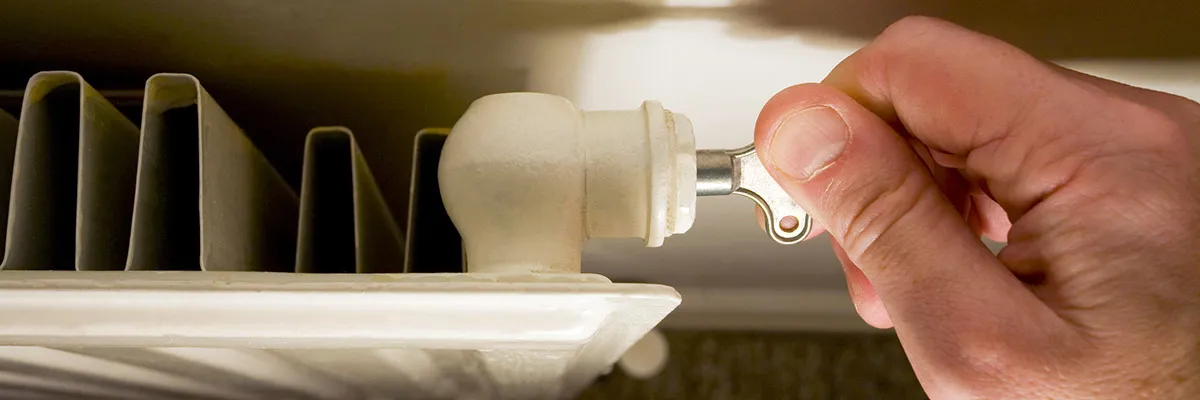
If you can’t find a radiator key, don’t worry. A flathead screwdriver is usually fine, and you can visit a hardware store if you’d prefer a key.
4. Locate the radiator bleed valve
On each radiator, you’ll find a small, round valve. It’s usually at the top of the radiator – this is what we need.
Place the bowl under the valve in case of spills. Then insert the radiator key (or flathead screwdriver) and hold the cloth right underneath.
5. Turn the key
Now, you should be good to go – turn the key anti-clockwise to open the valve. Usually, you’ll only need one-and-a-half turns.
You’ll hear a hissing sound as the radiator leaks air. A solid sign that everything’s going according to plan. Keep the key turned until water starts coming out and the hissing stops.
This tells us there’s no air left.
6. Close the valve
When water is flowing freely, it’s time to close the valve.
If you’re quick, only a little water should come out. And even if it does, you’ll be ready with your cloth and bucket.
7. Repeat the process
You’ll have to repeat this process for the other radiators in your home.
After this, you should feel confident that your radiator system is free from trapped air. But how can you be sure?
8. Turn your central heating on…again
Now it’s time to see if your hard work has paid off. Turn your central heating back on and check whether the radiators are heating evenly.
You might need to bleed the radiators again if you still find cold spots. If that still doesn’t work, you might need a more serious radiator repair or flush.
Bleeding your radiators is a simple process, but there are still a few things you’ll need to remember.
Watch your boiler pressure
Bleeding radiators can sometimes lower boiler pressure. If it drops too low, it can affect your system.
After bleeding your radiators, check the boiler pressure (it should usually be between 1.0 and 1.5 bar). If it’s beneath those levels, you'll need to know how to increase the boiler pressure.
Try not to over-bleed the radiators
If too much water escapes the radiators you’re bleeding, it could leave your system short.
When that happens, you’ll have to top up the water in your central heating system to set things right. If you need help with this, a Gas Safe registered plumber can help you.
Do this every year
Air will build up in your system naturally, every year. So, you’ll need to bleed your radiators every year, too.
Many people do this in the late autumn or winter, with colder weather quickly approaching. You don’t need to do this but it’s a good call.
It’s one of many autumn home maintenance jobs you'll need to handle.
You’re not alone
If you don’t have the time to bleed your radiators, a plumber can step in for you.
Bleeding radiators can be a mucky job, so you might prefer to leave it to a professional. If there are other problems present, they can identify them as well.
Yes, you may not want to rack up more central heating installation costs and maintenance expenses, but proactive care is the best way to keep your system running well.
Need to know more about how to bleed a radiator? Get answers to most-asked questions below.
What are the signs my radiators need bleeding?
There are several signs you might need to bleed your radiator, such as:
Radiator is cold at the top but warm at the bottom
You hear gurgling or bubbling sounds when the heating is on
The entire radiator stays cool even when the heating is running
Uneven heating throughout your home
These signs could point to some other issues, too, but before you start exploring boiler repair costs, radiator bleeding is well worth trying.
When is the best time to bleed a radiator?
Generally, experts suggest bleeding radiators annually, in the autumn, which means your radiators will be fit and firing for the cold winter ahead.
However, you should always try bleeding radiators if you notice poor performance, regardless of the time of year.
Finally, consider bleeding your radiators if you've installed a new boiler or if you've recently covered the cost of moving a radiator.
The disruption from both radiator relocations and new part installations could have allowed air to enter the system.
What should I do if no water or air comes out?
If this happens, don't panic. There are two likely explanations:
Your radiator valve might be blocked
The radiator might be empty due to a system issue
You may need to flush or refill your system. In either case, you'll need to consult a heating engineer.
Pro tip: worried about spending money on bleeding radiators? You can sometimes bundle radiator checks with boiler service costs to save money.
When scheduling an annual service, see if your chosen heating engineer is willing to make a deal.
Is it safe to bleed a radiator myself?
Yes, it’s generally as safe and simple a DIY task as you'll get when it comes to central heating installations. However:
Use caution to avoid hot water burns.
Stop if something seems wrong (like lots of water leaking) and contact a professional
If you've got a little experience with radiators – you know how to fit thermostats on radiators, for example – this task will be simple for you.
Do I need to bleed my underfloor heating?
Whether you're looking into underfloor heating costs or you already have a system in place, understanding maintenance requirements matters.
Obviously, electric underfloor heating will never need bleeding, but what about wet underfloor heating systems?
In the vast majority of cases, no, bleeding is not required.
For some older systems, though, you might need to do this occasionally, so consult the manufacturers instructions.
With our tips, bleeding your radiators should be quick and easy.
Just make sure to be patient and get everything you’ll need ready before the bleeding begins.
Want an expert to handle the problem for you? Either choose from the top plumbers near you or post an enquiry for fast responses from local services.
For more DIY guides, hiring advice, and money-saving tips, check out the Yell blog now.