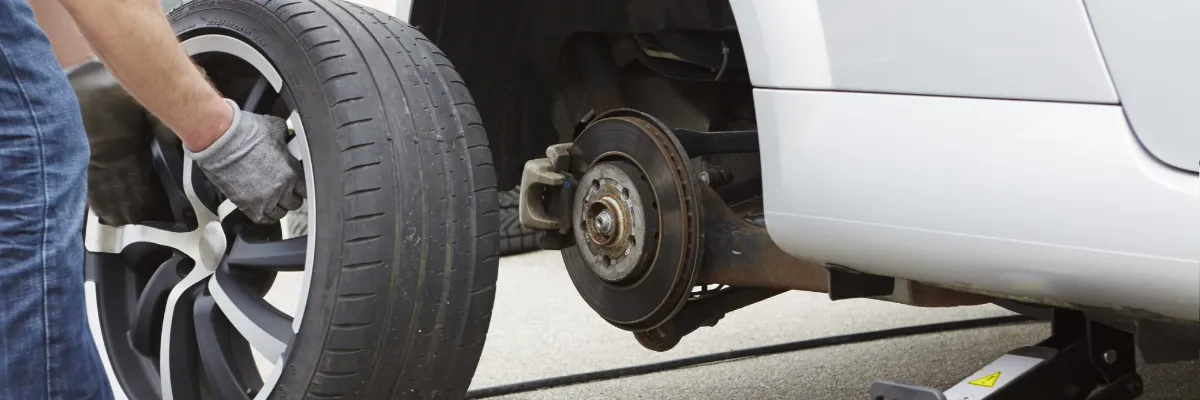
Want to know how much brake pad replacements cost? Read on and discover costs for new brake pads and discs for larger and smaller vehicles.
Front brake pad replacement: £105 to £135
Rear brake pad replacement: £100 to £130
Combined front brake pads and discs replacement: £190 to £240
Combined rear brake pads and discs replacement: £185 to £235
Complete front / rear brake pad replacement: £205 to £265
Complete front / rear brake pads and discs replacement: £375 to £475
Arranging brake pad replacements is a vital aspect of vehicle maintenance, making sure your car’s braking system remains effective and safe.
Costs for brake pad replacement in the UK typically range from £100 to £240.
This exact cost will depend on the size of your car's engine and whether you’re replacing front, rear, or both sets of pads and discs.
When shopping for brake pads and discs, the amount you’ll pay will also be influenced by the exact units you choose, which can vary in price considerably.
Read on for a detailed breakdown of costs, factors influencing pricing, and tips to save money on brake repairs.
Data for this guide was collected in December 2024 from reputable online sources.
Want to know what you can expect to pay for brake pad and disc replacements? Read on below for a quick breakdown.
Task or service | Engine size | Average cost (£) |
|---|---|---|
Front pads only | Up to 1300 cc | £105 |
Front pads and discs | Up to 1300 cc | £190 |
Rear pads only | Up to 1300 cc | £100 |
Rear pads and discs | Up to 1300 cc | £185 |
Front pads only | Up to 1600 cc | £115 |
Front pads and discs | Up to 1600 cc | £205 |
Rear pads only | Up to 1600 cc | £110 |
Rear pads and discs | Up to 1600 cc | £200 |
Front pads only | Up to 1900 cc | £120 |
Front pads and discs | Up to 1900 cc | £215 |
Rear pads only | Up to 1900 cc | £115 |
Rear pads and discs | Up to 1900 cc | £210 |
Front pads only | Up to 2200 cc | £130 |
Front pads and discs | Up to 2200 cc | £230 |
Rear pads only | Up to 2200 cc | £125 |
Rear pads and discs | Up to 2200 cc | £225 |
Front pads only | Over 2200 cc | £135 |
Front pads and discs | Over 2200 cc | £240 |
Rear pads only | Over 2200 cc | £130 |
Rear pads and discs | Over 2200 cc | £235 |
Costs accurate as of December 2024
The cost of replacing your brake pads and discs – either separately or together – will be affected by your vehicle’s engine size.
Here’s what you can expect to pay for brake pad and disc replacements in the UK.
Front pads only (up to 1300 cc)
Replacing your front brake pads is an essential part of car maintenance, ensuring your vehicle stops smoothly and safely.
For vehicles up to 1300 cc, this service typically costs around £105.
Front pads and discs (up to 1300 cc)
Need both your front pads and discs replaced? Using a quality mechanic means first-rate braking performance and peace of mind.
For cars up to 1300 cc, expect to pay an average of £190 for the job.
Rear pads only (up to 1300 cc)
Don’t forget about your rear brake pads! Keeping them in good condition is key for balanced braking.
Replacing the rear pads on a car up to 1300 cc comes in at an average of £100, making it a small price to pay for better performance.
Rear pads and discs (up to 1300 cc)
If both the rear pads and discs need attention, you’re looking at an average cost of £185 for vehicles up to 1300 cc.
Front pads only (up to 1600 cc)
For vehicles up to 1600 cc, replacing the front brake pads costs about £115 on average.
Front pads and discs (up to 1600 cc)
Cars up to 1600 cc needing a full front brake service – pads and discs – can expect an average cost of £205.
Rear pads only (up to 1600 cc)
Rear brake pads on a car up to 1600 cc can be replaced for an average of £110.
Rear pads and discs (up to 1600 cc)
For a full rear brake refresh, including pads and discs, the average cost for cars up to 1600cc is £200.
Front pads only (up to 1900 cc)
Front brake pads for vehicles with a larger engine size of up to 1900 cc average around £120 for replacements.
Front pads and discs (up to 1900 cc)
A full front brake service, including both pads and discs, comes in at £215.
Rear pads only (up to 1900 cc)
Rear pads for cars up to 1900 cc typically cost £115 to replace. A well-maintained braking system means smoother drives and fewer worries.
Rear pads and discs (up to 1900 cc)
For a complete rear brake service, including pads and discs, the average cost for vehicles up to 1900 cc is £210.
Front pads only (up to 2200 cc)
Replacing the front pads on vehicles up to 2200 cc costs an average of £130.
Front pads and discs (up to 2200 cc)
A full front brake overhaul for cars up to 2200 cc, including both pads and discs, averages £230.
Rear pads only (up to 2200 cc)
Rear pads on vehicles up to 2200 cc can be replaced for an average cost of £125.
Rear pads and discs (up to 2200 cc)
For a complete rear brake refresh, including pads and discs, the cost for cars up to 2200 cc averages £225.
Front pads only (over 2200 cc)
Vehicles with larger engines (over 2200 cc) require robust front pads, costing around £135 on average to replace.
This service ensures you can confidently handle your car’s power.
Front pads and discs (over 2200 cc)
For cars over 2200 cc, a full front brake service costs an average of £240.
This includes pads and discs, delivering optimal braking performance for powerful vehicles.
Rear pads only (over 2200 cc)
Rear brake pads for vehicles over 2200 cc cost around £130 to replace.
It’s a vital service to ensure your braking system performs evenly and reliably.
Rear pads and discs (over 2200 cc)
For larger engines over 2200 cc, replacing both rear pads and discs averages £235.
This ensures your vehicle stops smoothly and safely, no matter the journey.
Like with oil change costs and other auto care expenses, there are several factors that might affect the cost of replacing brake pads, including:
Engine size and vehicle type: larger vehicles and those with higher engine capacities often require more robust and expensive components
Material and quality: premium brake pads and discs provide better performance and durability but come with a higher price tag
Labour costs: rates for mechanics can vary based on location, experience, and garage type
Extent of repair: generally, replacing both pads and discs together is more costly than replacing pads alone
Like with car battery replacement costs, you'll need to find a balance between quality (and safety) and your budget.
Thinking of replacing your brake pads? Get answers to top-asked questions before booking in with a mechanic.
How do I know if my brake pads need replacing?
All brake pads wear out over time. Here are the key signs you should look out for:
Squeaking or grinding noises: if you hear a high-pitched squeak or a grinding sound when braking, it often means your brake pads are too thin or have completely worn out
Reduced braking performance: if struggling to stop your car as quickly as usual, it could mean your pads are on the wane – test them in a safe environment to check responsiveness
Dashboard warning light: many modern cars have a brake pad warning light, so don’t ignore it when it pops up
Visual inspection: if you can see your brake pads through the wheels, check their thickness – pads under 3 mm thick are overdue for replacement
Spotting any of these signs? Don’t delay – book a brake inspection immediately. Catching the problem early can save you money and keep you safe.
How long do brake pads last?
Asking how long brake pads last is a little like asking how long a pair of shoes will last – it depends on how you use them. That said, here are some general guidelines:
Average lifespan: most brake pads last between 25,000 and 60,000 miles, but this varies
Driving habits: stop-start city driving wears them out faster than long, steady motorway journeys
Road conditions: driving in hilly areas where you brake more frequently can shorten their lifespan
Keep track of when your brake pads were last replaced and check your car manual for the manufacturer’s recommendations.
A quick look at your brake pads while working your way through a car service checklist is a good way to spot early signs of wear.
Can I drive with worn brake pads?
Short answer: no, you really shouldn’t. Driving with severely worn brake pads can undermine your safety, and the safety of other drivers and pedestrians.
Here’s why:
Worn pads mean reduced braking power, which is downright dangerous for you, your passengers, and other road users
Continuing to drive can lead to damage to the brake discs, meaning both a brake AND disc replacement and a bigger repair bill
Driving with faulty brakes could land you in legal trouble – if your car fails a roadside safety check, you risk fines or even points on your licence
Remember: don’t gamble with safety – whether your brake pads aren't performing or your car is telling you to change the oil, you need to safeguard your safety.
Replace worn brake pads as soon as you spot a problem.
Can I save money on brake repairs?
Absolutely! Here’s how to get the job done without breaking the bank:
Shop around for quotes: don’t settle for the first price you’re given – compare prices from local garages, chain workshops, and dealership services
Use trusted local garages: smaller, independent garages often charge less than main dealers while offering comparable service
Plan ahead: if you wait until the pads are completely worn, you risk damaging other parts of the braking system, which will cost you more – regular vehicle inspections can catch problems early
Whether you're exploring MOT test costs or trying to cut brake pad replacement costs, it pays to shop around; it's the most reliable way to get value for money.
Pro tip: look for garages that offer free brake checks. This way, you can confirm if your pads really need replacing before committing to a service.
What are the risks of delaying a brake pad replacement?
Delaying a brake pad replacement isn’t just expensive, but dangerous. Here’s what can go wrong:
Damage to brake discs: worn pads expose the metal underneath, which can grind against the brake discs, causing irreversible damage
Reduced safety: poor braking performance increases your stopping distance
Bigger repair bills: replacing pads is relatively cheap compared to replacing discs or an entire braking system
If you think there’s a problem with your brake pads or notice diminishing performance, act sooner rather than later.
Should I replace brake pads and discs together?
Not always, but there are times when it’s a good idea:
When to replace together: if your brake discs show signs of wear – like grooves or cracks – it’s best to replace them along with the pads
When to replace only pads: if the discs are in good condition, just swapping the pads is fine – a reputable mechanic will inspect both and advise you
How long does it take to replace brake pads?
You won’t be without your car for long. Replacing brake pads typically takes a professional mechanic 1 to 2 hours. If your discs need changing too, it might take a bit longer.
Pro tip: book your service at a time when you won’t need your car urgently.
Many garages offer a “while you wait” service for brake replacements, so you can bring a book or laptop and get it done in one sitting.
Can I save money by replacing my brake pads myself?
It’s possible, but we don't recommend it. While you can learn how to disconnect a car battery or how much oil to put in your car, this is a more complicated and demanding task.
If you don't replace the brake pads properly, you're putting yourself and others at risk. If you're still considering DIYing it, here’s what you need to know:
Pros: doing it yourself could save you £50 to £150 in labour costs
Cons: brake systems are complex, and a mistake can be catastrophic – DIY is only an option if you’re confident and experienced in car maintenance
Unless you're deeply experienced with vehicle maintenance, leave it to a professional. The cost of a mistake isn’t worth the risk to your safety.
Are all brake pads the same?
Nope, just like you need to know what to look for when buying a new car battery, so too do you need to know about the different types of brake pads.
The right choice depends on your car and driving style. Here’s a quick breakdown:
Ceramic pads: long lasting and quiet but more expensive – great for smooth, everyday driving
Metallic pads: Affordable and durable but noisier – a solid choice for heavier vehicles or spirited driving
Organic pads: quiet and budget friendly but wear out faster – ideal for light, city driving
Pro tip: get recommendations from your mechanic for your car. Spending a bit more on high-quality pads can save you money in the long run.
Conclusion
Brake pad replacement is essential for maintaining safety and performance. Costs can range from £100 to £240 depending on your vehicle type and requirements.
Regular checks and proactive maintenance can help avoid unnecessary expenses.
Looking for a reliable brake repair service service that can handle brake pad replacements? On Yell, you can find highly rated garages and mechanics near you in seconds.
Compare services, read reviews, then contact your preferred specialists by phone or email – and keep your vehicle safe today.
No time to search? Take a moment to post a free enquiry, instead. Just provide a few quick details and wait to hear from mechanics and garage services in your area.
For more auto care help, cost guides, and money-saving tips, start exploring the Yell blog today.
Disclaimer
Cost data was gathered from an analysis of wider industry data. Actual costs may vary depending on location or complexity of the task, project, or service. We encourage customers to reach out to industry professionals for specific quotes based on their unique requirements.